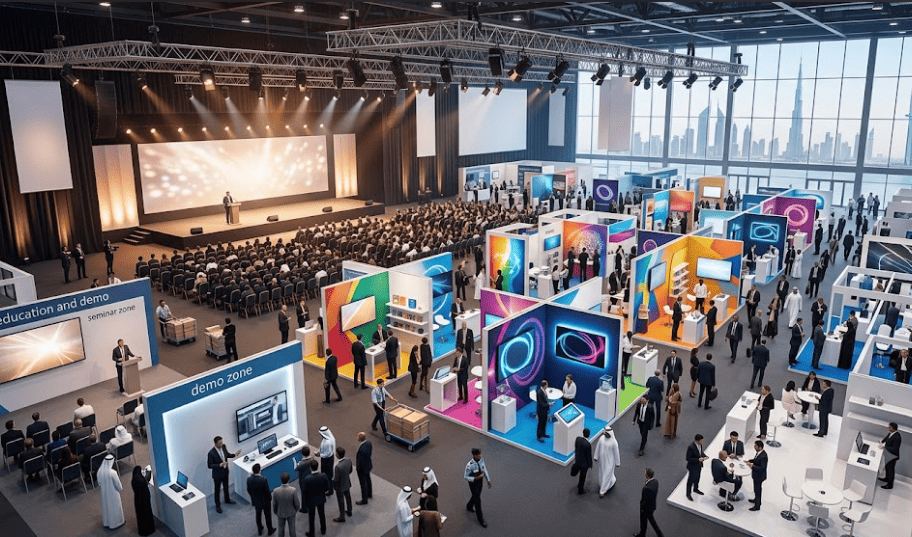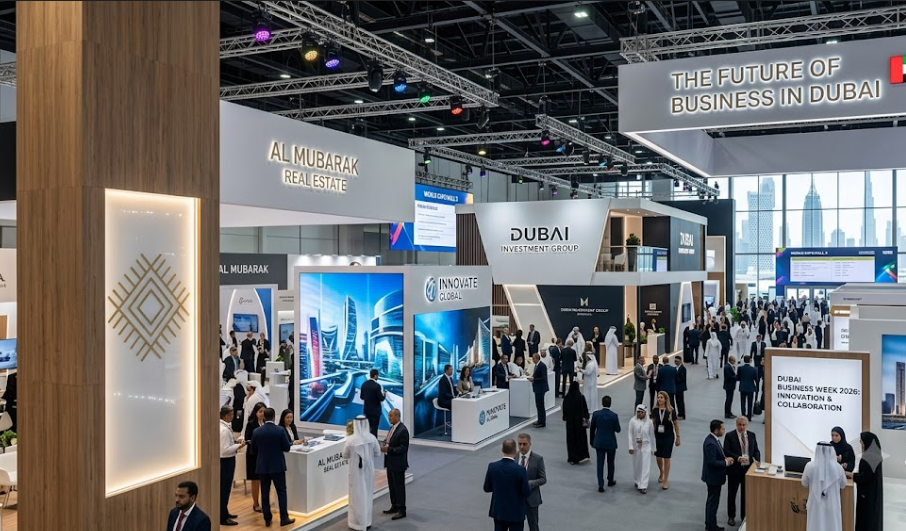
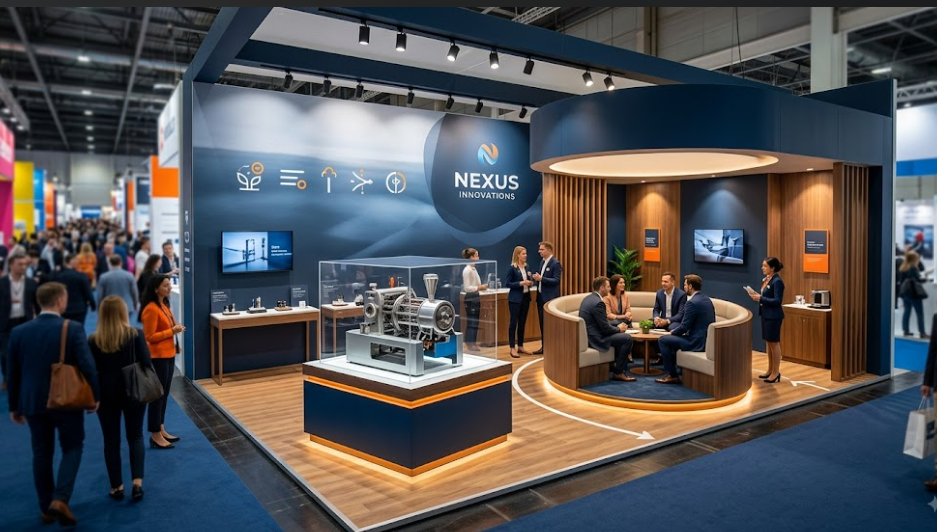
The busy exhibition floor is filled with a rainbow of colours, signs, lights, and people. You have very little time to encourage a visitor to stop at your stand. An effective display is more than attractive; it clarifies your message to visitors about your product or service, it indicates where visitors should go and it gives a reason for visitors to stop.
Start With A Clear Purpose
Think about what you want viewers to look at first time before you build your display. Your primary purpose may be to promote a new product, to greet new customers, to inform people of something, or to increase brand recognition. Once you have determined your purpose, all of the elements in your booth should reinforce that message. Signage, furniture, graphics, lighting, and meeting areas should all target your end goal in order to be successful.
Build A Simple Visitor Journey
Your display should lead people easily to each part of your stand. How should they arrive, what do they need to know, and where can they chat with you? This avoids people wandering through aimlessly. Your entrance needs to be open; you need to be able to see your key message straight away without people hunting around for it.
Use Space With Care
Huge exhibition spaces may be flashy, but empty areas may also leave visitors feeling that your exhibit is not quite complete. Small spaces tend to become overcrowded with too much furniture and equipment. Your exhibition booth design should provide ample space for visitors to browse, pause, talk, and discover. Maintain clear access routes and position key displays so they are visible without obstructing other visitors.
Create A Strong Visual Focus
Your display should have one area that captures attention immediately. This might be a large picture or product, a message, a screen, or an unusual detail. Make sure your centrepiece is relevant to your purpose and can be easily seen and understood from a distance.
- Avoid clutter by not having more than one large sign.
- Select one eye-catching feature and enhance its message with other details.
Tell A Simple brand Story.
A well-presented display will communicate your message without overwhelming your audience. It should have a consistent theme – your colour scheme, photographs, message, products, signage and display layout should all be linked. Identify what key message you want the visitor to carry away from your stand.
A clear message is easy for visitors to understand in just a few seconds.
The more visual elements that support your message, the more cohesive your display becomes and the easier it is for your customers to identify.
Choose Colours That Work
Colour has the power to alter the feeling of your display. Bright colours have the ability to pull the viewer in while softer colours exude a more relaxed and business like appearance. The colours you decide to use should also be easily readable when compared to the message you’re trying to get across.
Do not overcomplicate the display by trying to use every colour in the rainbow.
Two or three main colours can make for a more sophisticated appearance while maintaining a focus on your graphics and products, and signs.
Make Your Graphics Easy
Visitors do not usually linger at an exhibit to read a lot of wording. Your graphics should be able to convey the important information immediately. Use brief text, simple images, and sufficiently large lettering so the visitor can read it as they pass.
Make sure your critical information is presented first.
If additional explanation is necessary, have a distinct section for the viewer to find and explore at their leisure.
Plan Lighting For Impact
Effective lighting allows products, signs, and key areas to be seen more easily. The lighting should complement your display so that it stands out but isn’t overwhelmed by the lighting. Highlight particular products or messages by using more lighting, and use calmer lighting in areas where you expect visitors to sit and talk.
Make sure the lighting isn’t harsh enough to cause a glare that obscures screens.
Good lighting arrangements can also make the room feel more welcoming.
Add Comfortable Meeting Areas
In addition to your display, think about your seating arrangement. Make sure your customers can sit in an area that isn’t in the way of your display or the main aisle. Have furnishings that are proportional to the size of your display area.
Smaller tables and chairs might be better than large furniture in a small area.
Try to keep conversations private and out of the way of the main pathways.
Let Products Speak Clearly
When displaying products, give each one of significance plenty of room to be seen. Don’t overcrowd the products as the visitors may not be able to see what is significant. Highlight the best products in the display.
Place simple information by them so visitors can see their function and significance immediately.
Good product placement is less like a shop window and more like a club of curious visitors.
Keep Your Display Accessible
Make sure that your display is inviting to all groups of visitors. Ensure walkways, entrances and exits are free and not restricted by displays and furniture. Information should also be accessible and legible to all people. By making your display space open and accessible, visitors will be more inclined to browse and read your information.
Test Everything Before Opening
A quick walk-around and a second opinion can alert you to a few little glitches that could become big issues. Walk around your booth and view it from all angles. Look at it from the perspective of visitors approaching from the hallway as well as from inside.
Test the screens, lights, displays, signs, chairs, and tables.
Your exhibition booth setup should be just as effective from across the hall as it is once you walk into it. A quick run-through and analysis can find hidden signs, inadequate lighting, and confusing layouts.
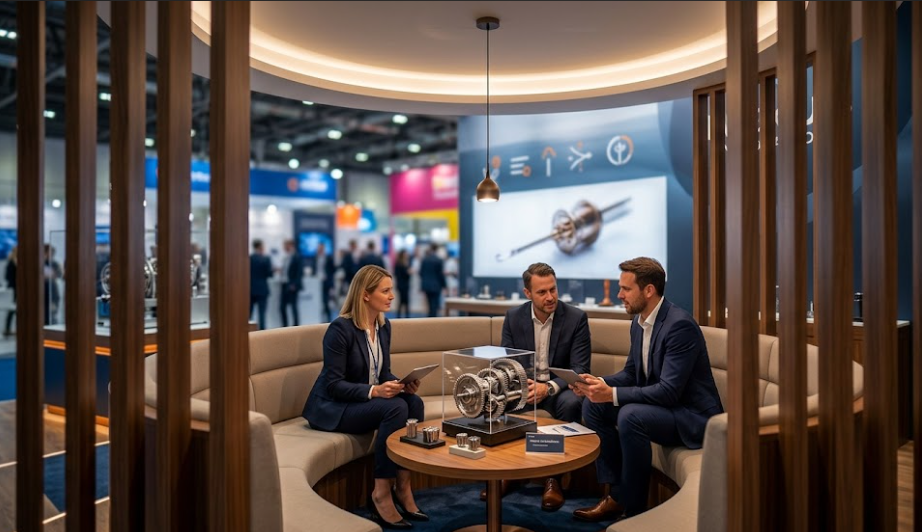
Make The Experience Memorable
Think about what you can offer your visitors that they will remember afterwards. It doesn’t always have to be the latest technology or some fancy features. An intriguing message, a memorable presentation of your products, a friendly chat, or a well-designed visual could be even more memorable than a busy stand. Your trade show booth design should be inviting to your visitors from the moment they walk in until they leave.
Review What Worked
As the exhibition ends, reflect on how visitors interacted with your space. Observe where visitors lingered, which areas were ignored, which displays prompted questions, and which areas stimulated discussion. You can build off this knowledge for your next exhibition. Each exhibition provides you with information to inform your next event.
Planning your next exhibition display in Dubai?
Standmakerdubai.com can help you deliver the concepts into an effective exhibition space. Based on your needs, available space, brand message, and target audience visiting the show, we can guide you through the planning process.
With the right design, your stand will enable your visitors to have a clear journey and will help you better utilize your available space. Find out your options and start planning with a purpose in mind.
Conclusion
An eye-catching exhibition display doesn’t have to be big. Your showcase should lead the visitor through the display, your message should be easy to understand, and your presentation space should be welcoming and functional. When everything works together, your exhibit becomes easier to interpret and more engaging. A well-planned display also helps you prevent overcrowding and ease the flow of visitors throughout the show.